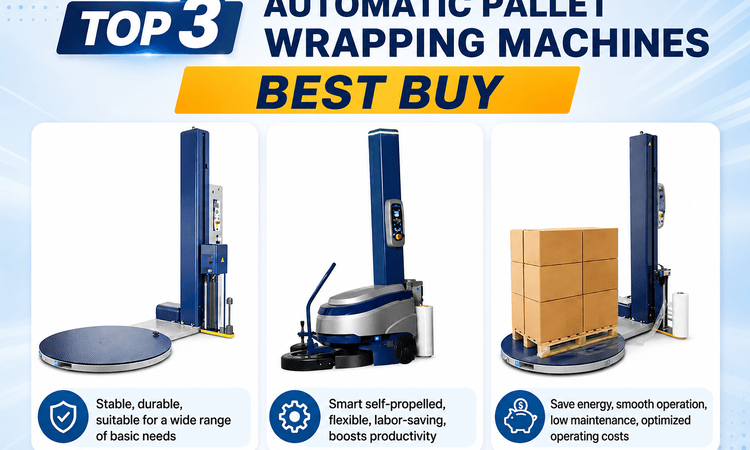


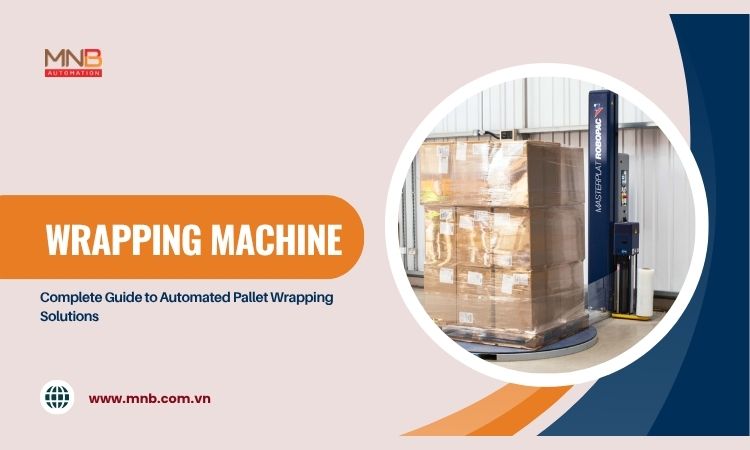
Wrapping machines have become an essential part of modern packaging operations. From securing palletized goods to protecting products during transportation, these systems help businesses improve efficiency, reduce labor costs, and maintain consistent packaging quality.
Mục lục
- What Is a Wrapping Machine?
- How Does a Wrapping Machine Work?
- Types of Wrapping Machines
- Key Benefits of Using a Wrapping Machine
- Industries That Use Wrapping Machines
- How to Choose the Right Wrapping Machine
- Wrapping Machine vs Manual Wrapping
- Maintenance Tips for Wrapping Machines
- Industrial Wrapping Machine Solutions from MNB
What Is a Wrapping Machine?
A wrapping machine is industrial packaging equipment designed to apply protective film around products, cartons, or palletized loads. The purpose of wrapping is to stabilize goods, improve handling safety, and protect products throughout storage and transportation.
Depending on production requirements, wrapping systems may operate manually, semi-automatically, or fully automatically.
Modern wrapping machines typically include:
- Wrapping platform or conveyor system.
- Film carriage mechanism.
- Film tension control system.
- Height detection sensors.
- Automation and control panel.
- Safety protection components.
Wrapping machines are widely used across manufacturing, warehousing, logistics, food processing, pharmaceuticals, and e-commerce industries.
How Does a Wrapping Machine Work?
Although machine designs vary, the overall wrapping process follows several common stages.
Step 1 – Load Positioning: Products or pallet loads are positioned onto the wrapping area manually or through conveyor transfer.
Step 2 – Film Attachment: Stretch film is attached to the product or pallet base before the wrapping cycle starts.
Step 3 – Automated Wrapping Process: The machine rotates the load or moves the wrapping mechanism around the product while maintaining controlled film tension.
Step 4 – Reinforcement Wrapping: Additional film layers may be applied to critical load areas for improved containment.
Step 5 – Film Cutting and Completion: Automatic systems cut and secure the film after wrapping is completed. This automated process ensures consistent packaging quality while reducing material waste.
Types of Wrapping Machines
Different packaging environments require different wrapping technologies.
Semi-Automatic Wrapping Machine
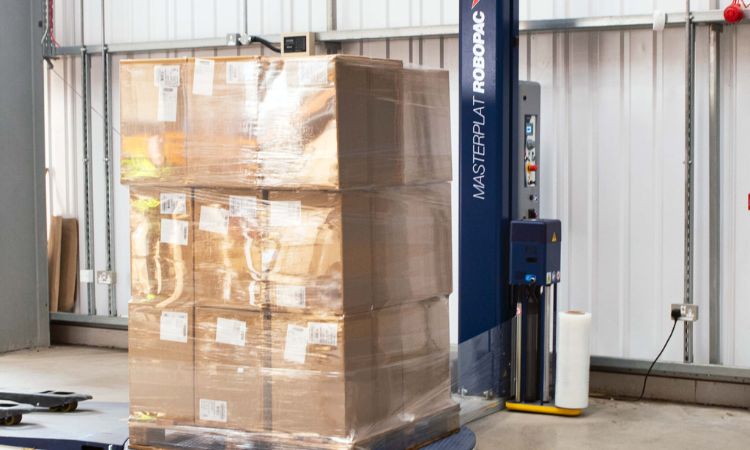
Semi-automatic machines require an operator to load pallets and start the cycle.
Typical advantages:
- Lower investment cost.
- Easy operation.
- Suitable for small and medium production volumes.
- Flexible for multiple pallet sizes.
This option is often selected by growing manufacturers seeking improved efficiency without full automation.
Automatic Wrapping Machine
Automatic stretch wrappers perform wrapping with minimal operator involvement.
Benefits include:
- High throughput.
- Consistent wrapping quality.
- Reduced labor requirements.
- Easy integration into automated lines.
These systems are commonly installed in industrial packaging facilities with continuous production.
Turntable Stretch Wrapper
Turntable machines rotate the pallet while the film carriage remains stationary.
Advantages:
- Compact footprint.
- Cost-effective operation.
- Suitable for stable pallet loads.
This is one of the most common pallet wrapping solutions.
Rotary Arm Wrapping Machine
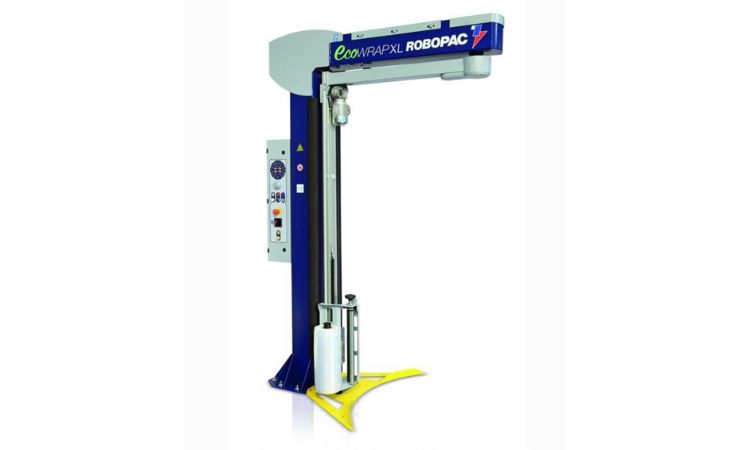
Instead of rotating the pallet, the wrapping arm moves around the load.
Key benefits:
- Ideal for heavy products.
- Suitable for unstable loads.
- Reduced risk of load shifting.
Industries handling fragile or tall products often prefer rotary arm systems.
Rotary Ring Wrapping Machine
Rotary ring machines are designed for high-speed industrial packaging.
Features:
- Extremely fast wrapping cycles.
- Continuous production capability.
- Advanced automation options.
They are typically deployed in large-scale manufacturing environments.
Key Benefits of Using a Wrapping Machine
Installing an automated pallet wrapping solution can generate measurable operational improvements.
Increase Packaging Efficiency
Wrapping machines significantly reduce packaging cycle times and improve operational throughput.
Reduce Packaging Material Costs
Controlled film application minimizes unnecessary film consumption.
Improve Product Protection
Consistent wrapping reduces:
- Product movement.
- Moisture exposure.
- Dust contamination.
- Transportation damage.
Lower Labor Requirements
Automated systems reduce repetitive manual tasks and improve workforce utilization.
Improve Packaging Consistency
Machine-controlled wrapping creates uniform packaging standards across production.
Industries That Use Wrapping Machines
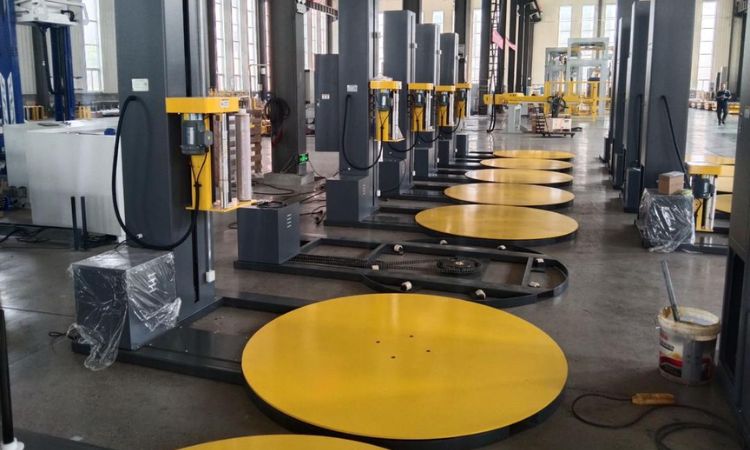
Wrapping solutions support a wide range of industries.
- Food and Beverage: Maintain product stability during storage and delivery.
- Logistics and Warehousing: Improve outbound shipping performance.
- E-commerce Fulfillment: Enable faster packaging operations.
- Pharmaceutical Manufacturing: Support clean and organized pallet handling.
- Industrial Manufacturing: Secure heavy products for transportation.
- Consumer Goods: Improve packaging appearance and load protection.
How to Choose the Right Wrapping Machine
Selecting the right equipment depends on operational requirements.
Production Capacity
Estimate daily packaging volume and future growth.
Product Dimensions
Evaluate:
- Product size.
- Pallet height.
- Load weight.
- Stability requirements.
Automation Level
Choose between:
- Semi-automatic systems.
- Fully automatic solutions.
- Integrated packaging lines.
Film Efficiency
Look for powered pre-stretch technology to reduce operating costs.
Integration Capability
Modern wrapping systems can integrate with:
- Conveyors.
- Labeling systems.
- Weighing equipment.
- Warehouse automation platforms.
Return on Investment
Calculate ROI based on:
- Labor reduction.
- Film savings.
- Throughput improvements.
- Lower shipping damage costs.
Wrapping Machine vs Manual Wrapping
| Criteria | Wrapping Machine | Manual Wrapping |
|---|---|---|
| Productivity | High | Low |
| Film Usage | Optimized | Excessive |
| Packaging Consistency | Stable | Variable |
| Labor Requirement | Low | High |
| Scalability | Excellent | Limited |
For businesses with recurring packaging operations, wrapping machines typically deliver stronger long-term value.
Maintenance Tips for Wrapping Machines
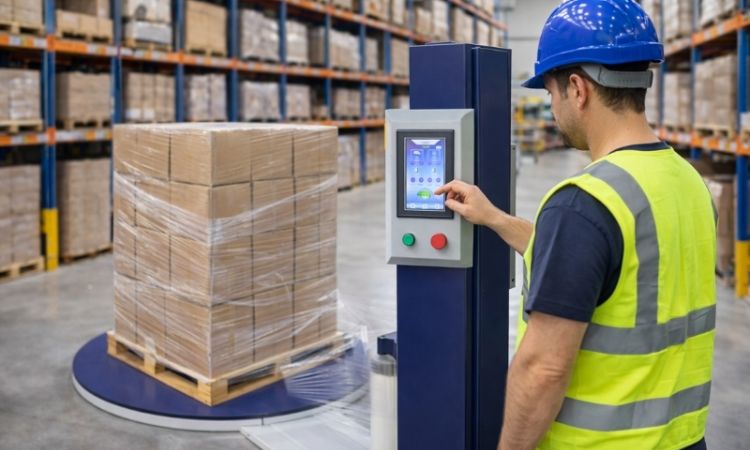
Preventive maintenance improves equipment reliability and reduces downtime.
Recommended practices:
- Inspect film carriage rollers regularly.
- Clean sensors and moving parts.
- Check film tension settings.
- Lubricate mechanical assemblies.
- Verify safety systems.
- Replace worn components proactively.
Routine maintenance also extends machine lifespan and maintains wrapping quality.
Industrial Wrapping Machine Solutions from MNB
MNB provides industrial packaging solutions designed to support different production environments and automation levels.
Whether businesses require semi-automatic pallet wrapping equipment or fully integrated end-of-line packaging systems, selecting the right machine depends on product characteristics, pallet dimensions, throughput targets, and future expansion plans.
Please contact MNB via hotline: 0936 304 626 or connect with our team directly on Zalo. We are ready to help you find the right packaging solution for your operational needs.