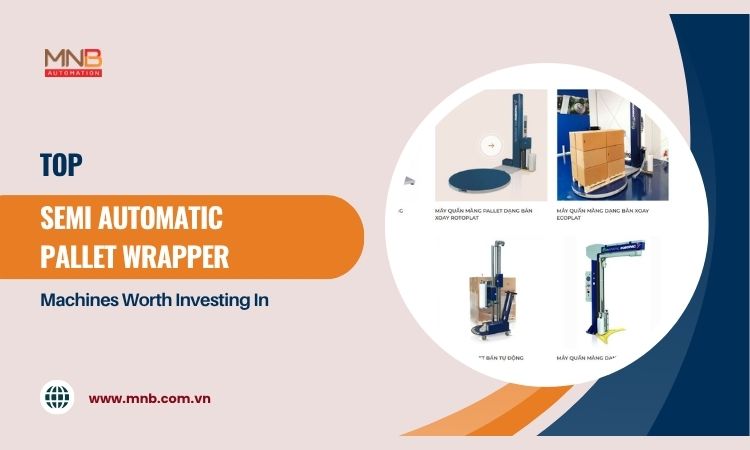


Securing palletized products manually often leads to inconsistent wrapping, higher labor costs, and increased risk during transport. A pallet wrapper or pallet wrapping machine helps businesses automate the wrapping process, improve load stability, reduce film consumption, and increase packaging efficiency.
Whether operating a warehouse, manufacturing plant, or logistics center, choosing the right pallet wrapping solution can significantly improve end-of-line packaging performance.
Mục lục
What Is a Pallet Wrapper?
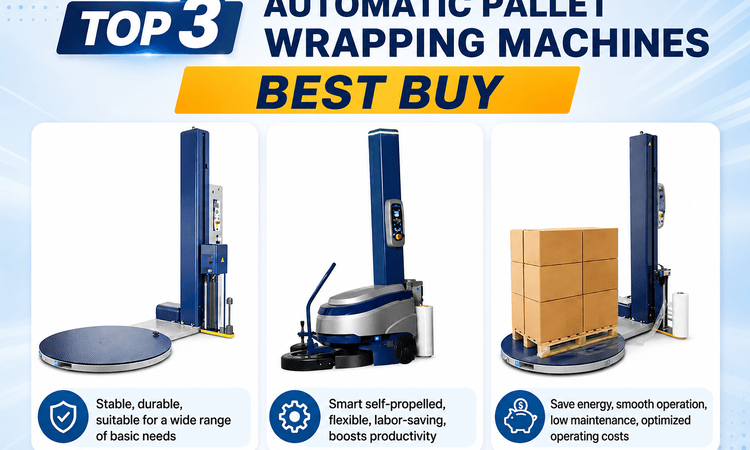
A pallet wrapper is industrial packaging equipment used to wrap stretch film around palletized loads for stabilization, protection, and easier handling during storage and transportation.
The machine automatically controls film tension, wrapping speed, and overlap to ensure every pallet receives consistent protection. Unlike manual wrapping, which depends heavily on operator skill, a pallet wrapping machine delivers repeatable packaging quality with minimal effort.
In global markets, this equipment may also appear under several related names:
- Pallet wrapper.
- Pallet wrapping machine.
- Stretch wrapping machine.
- Pallet stretch wrapper.
- Automatic pallet wrapper.
- Stretch film wrapping machine.
Although terminology varies, the purpose remains the same: securing pallet loads efficiently while reducing packaging costs.
How a Pallet Wrapping Machine Works
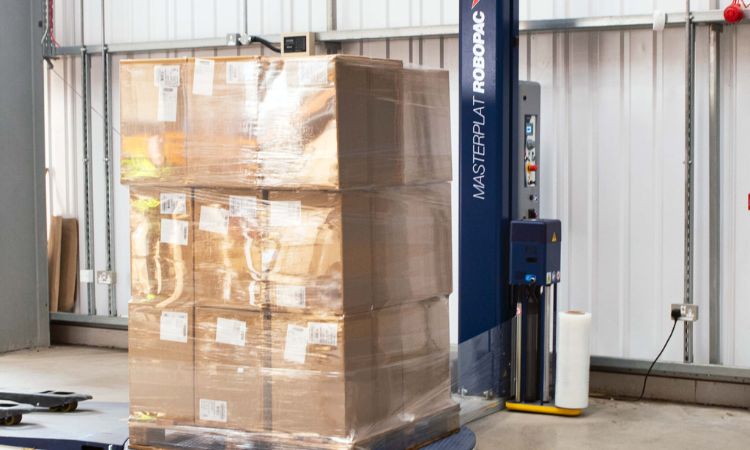
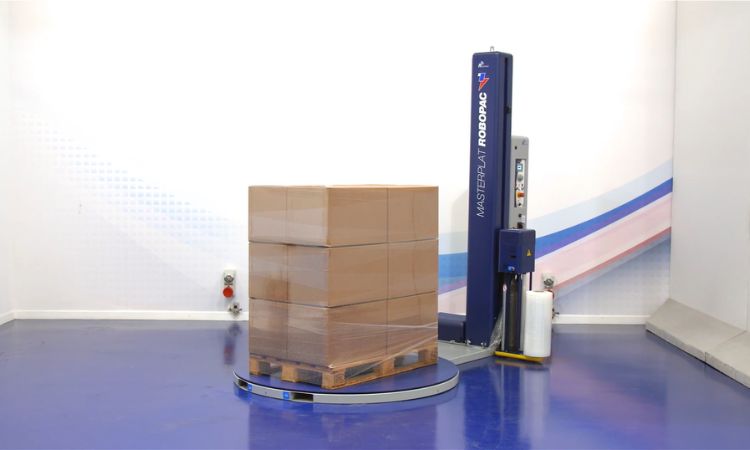
Understanding the machine structure helps businesses select equipment that matches production requirements.
Turntable Platform
The turntable is responsible for rotating the pallet during wrapping. It creates smooth and stable movement to ensure even film distribution.
Turntable systems are widely used because they offer:
- Stable wrapping quality.
- Simple operation.
- Compact installation footprint.
- Cost-effective investment.
Film Carriage System
The film carriage controls stretch film feeding and tension.
Advanced machines may include pre-stretch technology, which stretches the film before application to maximize material efficiency while maintaining strong load containment.
Benefits include:
- Lower stretch film consumption.
- Better wrapping consistency.
- Reduced packaging costs.
Control Panel and Automation System
Modern pallet wrapping machines typically include user-friendly control systems that allow operators to adjust:
- Number of wrapping cycles.
- Rotation speed.
- Film overlap percentage.
- Top and bottom reinforcement.
- Film tension settings.
This flexibility allows one machine to support multiple pallet sizes and packaging requirements.
Height Detection Sensors
Automatic sensors detect the pallet height and control the wrapping sequence accordingly.
This feature eliminates unnecessary wrapping and ensures complete load coverage.
Typical Wrapping Process
The pallet wrapping process generally follows these steps:
- Load products onto the pallet.
- Position the pallet on the machine.
- Attach stretch film to the load.
- Start the wrapping cycle.
- Machine wraps automatically.
- Remove the completed pallet.
This automated process significantly improves packaging speed and consistency.
Benefits of Using a Pallet Wrapper
As packaging operations grow, automation becomes increasingly valuable.
Increase Packaging Productivity
Manual wrapping can create bottlenecks in production and warehouse operations. A pallet wrapper accelerates packaging cycles and allows businesses to process more shipments in less time. Higher throughput leads to improved operational efficiency and faster order fulfillment.
Reduce Stretch Film Waste
Film consumption represents a major packaging cost.
Modern pallet wrapping machines optimize film usage through controlled tension and pre-stretch technology, reducing unnecessary material consumption while maintaining load stability.
Over time, these savings can generate measurable cost reductions.
Improve Load Stability and Product Protection
Poorly wrapped pallets increase the risk of:
- Product movement.
- Packaging damage.
- Collapsed loads.
- Transport losses.
Automated wrapping ensures products remain tightly secured throughout storage and shipping.
This is especially important for fragile, stacked, or high-value products.
Lower Labor Requirements
Manual pallet wrapping is repetitive and physically demanding. Automation reduces operator workload and enables employees to focus on higher-value production activities. Businesses also benefit from improved workplace efficiency and reduced dependency on manual labor.
Standardize Packaging Quality
One of the biggest advantages of a pallet wrapping machine is consistency. Every pallet receives identical wrapping parameters regardless of shift changes or operator experience. Consistent packaging creates a more professional appearance and improves supply chain reliability.
Types of Pallet Wrapping Machines
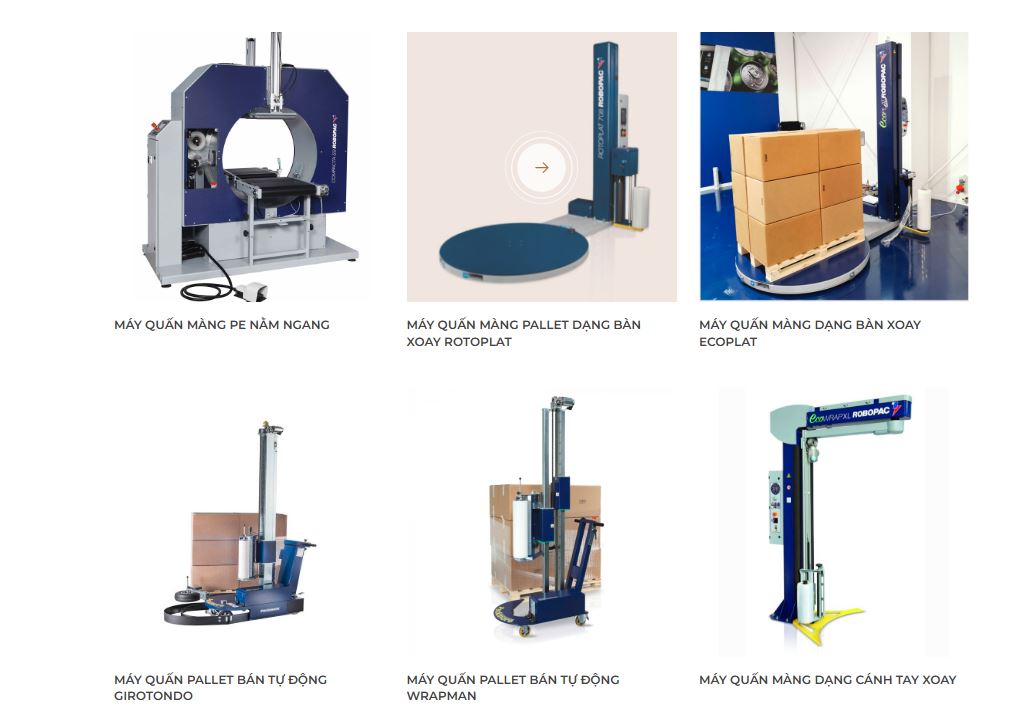
Selecting the correct machine depends on production volume, pallet dimensions, and operational goals.
Semi-Automatic Pallet Wrapper
Semi-automatic models require operators to load pallets and initiate the cycle. They are commonly chosen by companies seeking packaging automation without large capital investment.
Best suited for:
- Small and medium businesses.
- Regional warehouses.
- Moderate production environments.
Key advantages include flexibility and ease of operation.
Automatic Pallet Wrapping Machine
Automatic systems perform wrapping with minimal operator involvement. These machines are designed for continuous production environments where efficiency and throughput are priorities.
Common benefits:
- Faster packaging cycles.
- Reduced labor requirements.
- Improved operational consistency.
Industries with large daily output often choose automatic solutions.
Turntable Pallet Wrapper
This machine rotates the pallet while film is applied.
Advantages include:
- Easy installation.
- Stable performance.
- Lower maintenance requirements.
It remains one of the most widely used pallet wrapping technologies.
Rotary Arm Pallet Wrapper
Rotary arm systems rotate the wrapping arm instead of moving the pallet.
This design is ideal for:
- Heavy loads.
- Tall products.
- Unstable pallet configurations.
Because the pallet remains stationary, product movement is minimized.
Integrated Pallet Wrapping Systems
Advanced production facilities often integrate pallet wrappers into complete packaging lines.
Integration options may include:
- Conveyor systems.
- Labeling equipment.
- Palletizers.
- Warehouse automation systems.
Integrated systems support continuous operation and maximize packaging efficiency.
How to Choose the Right Pallet Wrapper
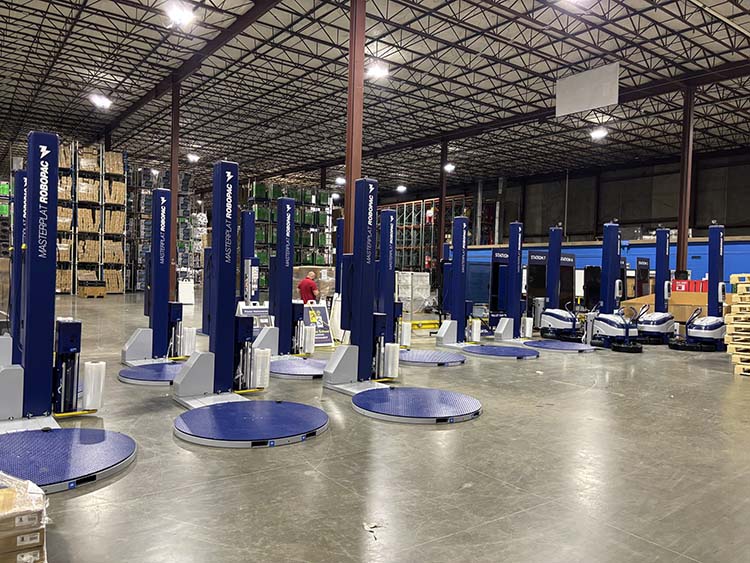
Before selecting equipment, businesses should evaluate several factors.
Load Dimensions and Weight Capacity
Confirm the machine supports required pallet sizes and maximum load weight.
Production Output
Daily packaging volume directly influences the level of automation needed.
Packaging Objectives
Identify priorities such as:
- Cost reduction.
- Throughput improvement.
- Labor optimization.
- Packaging consistency.
- Equipment Scalability.
Choose a pallet wrapping machine capable of adapting to future production growth.
Total Operating Cost
Evaluate not only purchase price but also:
- Film consumption.
- Maintenance requirements.
- Energy usage.
- Long-term efficiency gains.
Industries That Use Pallet Wrappers
Pallet wrapping machines are widely used across multiple sectors.
Common applications include:
- Food and beverage manufacturing.
- Pharmaceutical production.
- Consumer goods packaging.
- Electronics manufacturing.
- Logistics and distribution centers.
- Industrial production facilities.
- E-commerce fulfillment operations.
Regardless of industry, automated pallet wrapping improves load security and packaging performance.
Improve Packaging Efficiency with Pallet Wrapping Machines
A reliable pallet wrapper or pallet wrapping machine does more than wrap products—it helps businesses improve productivity, reduce operating costs, and maintain packaging consistency across every shipment.
By selecting equipment based on production requirements, pallet specifications, and future growth plans, companies can build a more efficient and scalable packaging operation.
Please contact MNB via hotline: 0936 304 626 or connect with our team directly on Zalo. We are ready to help you find the right packaging solution for your operational needs.