

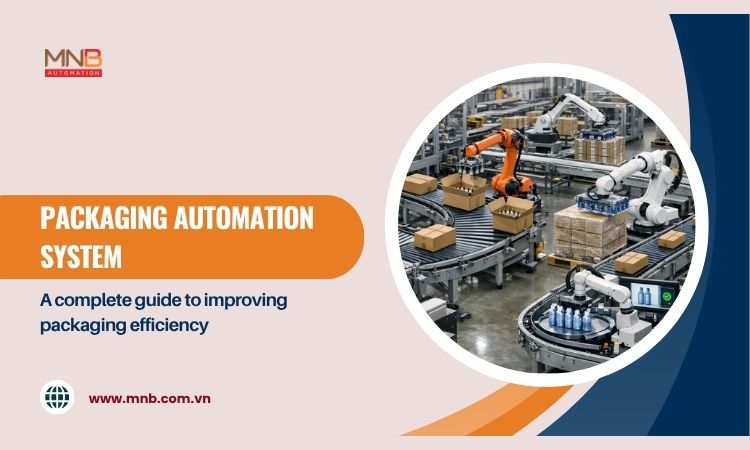
Modern manufacturing and logistics require packaging processes that are faster, more consistent, and easier to scale. A packaging automation system helps businesses reduce manual work, improve packaging quality, and optimize operational costs through integrated machines and intelligent controls.
From individual packaging equipment to fully automated production lines, packaging automation has become an essential investment for companies aiming to improve productivity and maintain competitiveness.
Mục lục
- What is a packaging automation system?
- How does a packaging automation system work?
- Main components of a packaging automation system
- Types of packaging automation systems
- Benefits of implementing packaging automation
- Industries that benefit from packaging automation
- How to choose the right packaging automation system
What is a packaging automation system?
A packaging automation system is a combination of machines, conveyors, control software, and automation technologies designed to perform packaging tasks with minimal manual intervention. Instead of relying on labor-intensive operations, the system creates a continuous and efficient packaging workflow.
Packaging automation can be applied to a single process or integrated across an entire production line depending on business requirements.
How does a packaging automation system work?
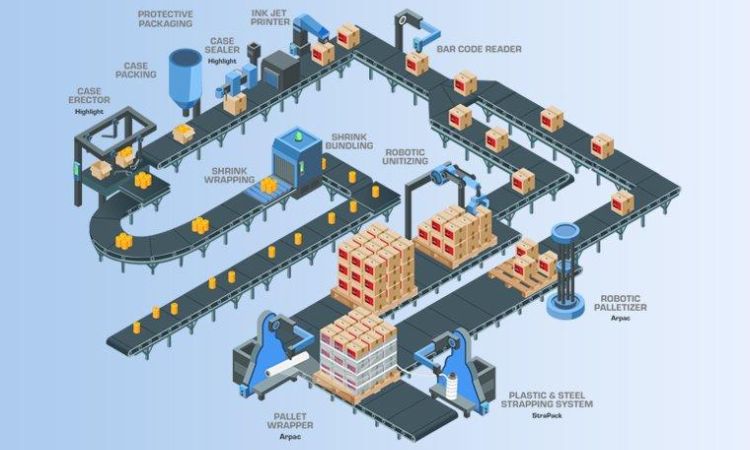
A packaging automation system connects multiple packaging stages into one synchronized process. Products move automatically through different stations where packaging tasks are completed with speed and consistency.
Automation allows manufacturers to standardize output quality while reducing delays between production and shipment.
Product input
Products enter the packaging line through conveyors, feeders, or transfer systems. This stage ensures products are positioned correctly before packaging operations begin.
Product handling
Automated handling systems align and transport products between stations. Accurate positioning helps maintain packaging quality and reduce operational errors.
Packaging operation
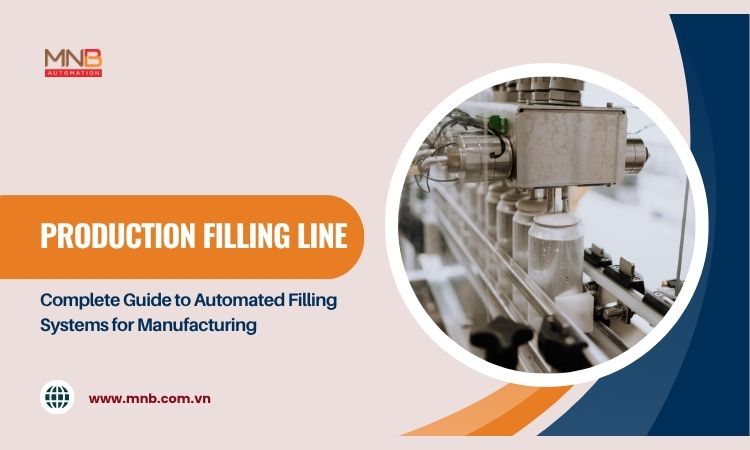
Machines perform packaging tasks such as filling, sealing, wrapping, labeling, or carton packing. Automation helps maintain stable output even at high production speeds.
Inspection and quality control
Sensors and inspection devices verify packaging accuracy throughout production. This process helps detect defects early and reduce product waste.
Final handling and palletizing
Finished packages are grouped, palletized, and prepared for transportation. End-of-line automation improves warehouse efficiency and shipment readiness.
Main components of a packaging automation system
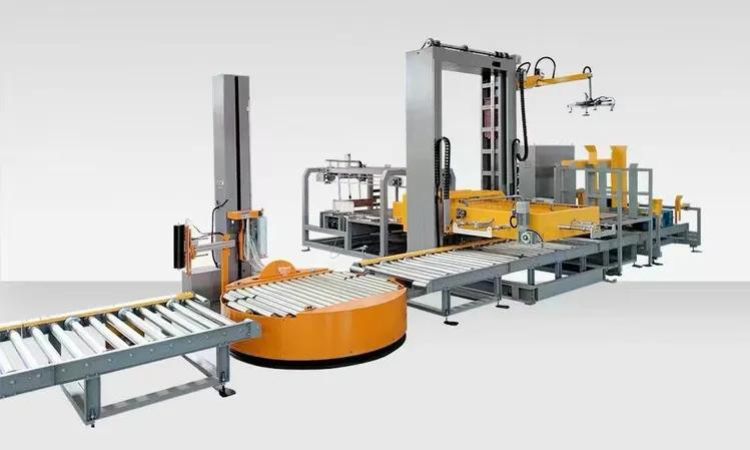
A complete packaging system includes equipment that works together to automate production and maintain continuous operation.
Conveying system
Conveyors move products automatically between packaging stages without interrupting production flow. They improve efficiency and reduce manual handling requirements.
Packaging machinery
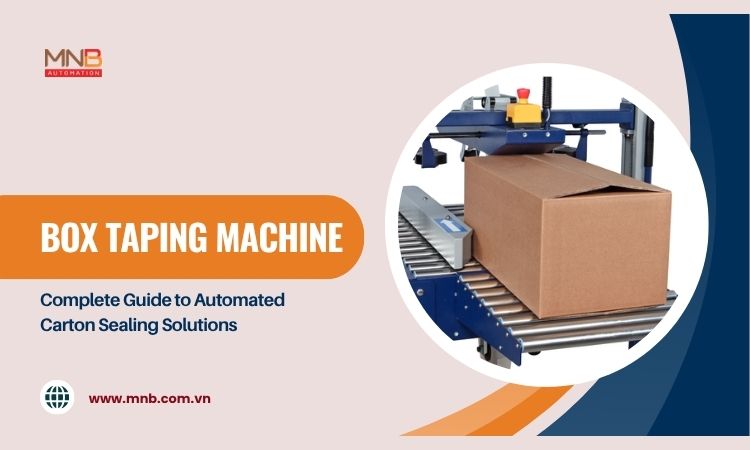
Packaging machines execute key functions such as filling, sealing, wrapping, and carton forming. The selected equipment depends on product type and production goals.
Automation controls
Control systems coordinate machine operations and ensure stable production performance. Operators can monitor and adjust packaging settings through centralized interfaces.
Sensors and inspection devices
Sensors track product movement and verify packaging conditions in real time. This supports higher accuracy and better process reliability.
End-of-line equipment
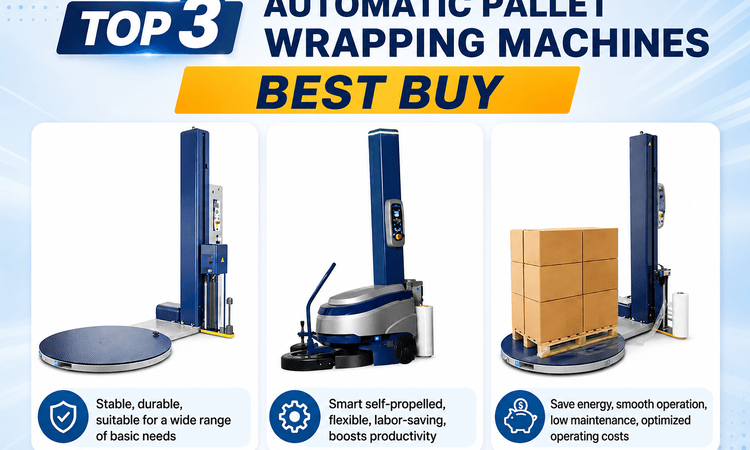
End-of-line equipment prepares products for storage and shipping. Typical applications include pallet wrapping, palletizing, and load stabilization.
Types of packaging automation systems
Packaging automation systems can be implemented at different levels depending on production scale and operational needs.
Semi-automatic packaging systems
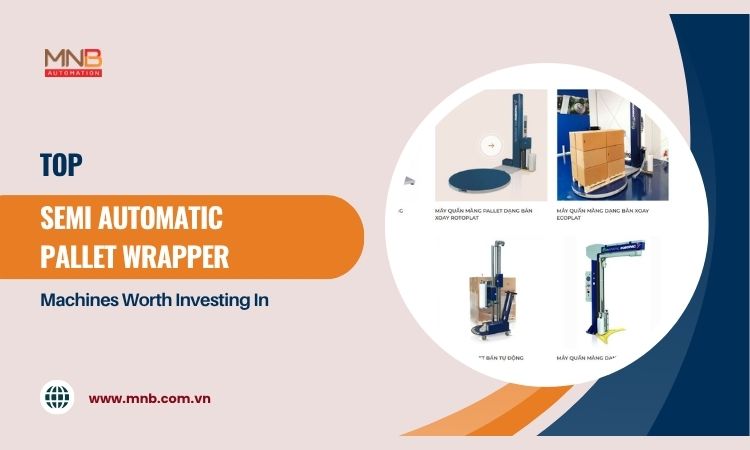
Semi-automatic systems combine machine assistance with manual operation. They are suitable for businesses that want to improve efficiency without making a large initial investment.
Fully automatic packaging systems
Fully automated systems perform packaging tasks with minimal operator involvement. They deliver higher throughput and more consistent packaging quality.
Integrated packaging lines
Integrated lines connect multiple packaging machines into one synchronized workflow. This solution is commonly used by manufacturers with high production demand.
Benefits of implementing packaging automation
Investing in packaging automation helps businesses improve productivity while controlling operational costs.
- Increase packaging speed: Automated equipment processes products continuously and reduces delays between packaging stages. This improves overall production capacity.
- Reduce labor costs: Automation decreases dependence on repetitive manual work. Businesses can allocate employees to higher-value operational tasks.
- Improve packaging consistency: Machines maintain stable packaging quality across large production volumes. Consistent packaging also improves product presentation.
- Reduce material waste: Automation controls film, tape, and packaging material usage more accurately. This contributes to lower packaging costs over time.
- Improve workplace safety: Automated handling reduces repetitive movement and manual lifting. This creates a safer and more efficient work environment.
- Enable production scalability: Packaging automation supports business growth without requiring proportional increases in labor. Companies can expand capacity more efficientl.
Industries that benefit from packaging automation
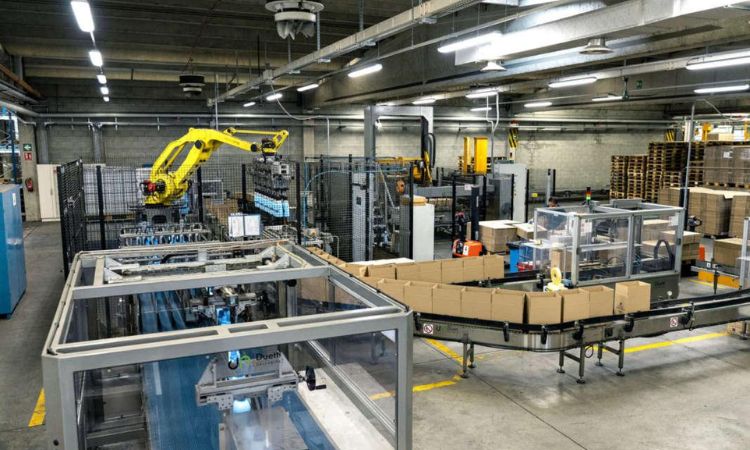
Packaging automation supports many industries that require efficient and standardized packaging operations.
Food and beverage: Automation improves packaging speed while maintaining hygiene and product consistency. It is widely used for both primary and secondary packaging.
Logistics and warehousing: Automated packaging helps accelerate order preparation and shipment processes. This improves warehouse productivity and delivery performance.
Manufacturing: Manufacturers use packaging automation to maintain stable output and reduce operational bottlenecks. It also supports continuous production workflows.
Pharmaceuticals: Packaging automation ensures accuracy, product protection, and traceability. These factors are critical for regulated production environments.
E-commerce: Automation enables businesses to process large order volumes efficiently. Faster packaging also helps improve customer delivery expectations.
Consumer goods: Standardized packaging improves product appearance and supports retail distribution requirements. Automated systems also help reduce packaging errors.
How to choose the right packaging automation system
Choosing the right packaging automation system requires evaluating current production needs, operational goals, and future expansion plans. Consider the following factors before making an investment decision:
- Production volume: Estimate current output and expected growth in the coming years. The selected system should handle production demand efficiently without creating bottlenecks.
- Product characteristics: Analyze product dimensions, weight, packaging materials, and handling requirements. Different packaging formats require different levels of automation and machine configurations.
- Available floor space: Review installation space and production layout before selecting equipment. Proper planning ensures smoother operation and easier maintenance access.
- Integration capability: Ensure the packaging automation system can connect with existing production lines and equipment. Seamless integration reduces downtime and implementation complexity.
- Operating cost: Consider maintenance expenses, energy consumption, and packaging material usage. Long-term operating efficiency should be evaluated alongside initial investment cost.
- Future expansion: Choose a scalable solution that can support increased production capacity over time. Flexible systems help businesses adapt to changing operational needs without major upgrades.
MNB is a reliable provider of packaging automation system solutions in Vietnam, offering modern equipment that helps businesses improve packaging speed, stability, and efficiency. With strong experience in industrial automation, MNB supports many industries in upgrading production lines and reducing operating costs.
Beyond supplying machines, MNB also provides consultation and system integration to ensure each solution fits specific production needs. If you are looking for a practical and efficient packaging automation solution, MNB is a trusted partner for your business.
Please contact MNB via hotline: 0936 304 626 or connect with our team directly on Zalo. We are ready to help you find the right packaging solution for your operational needs.