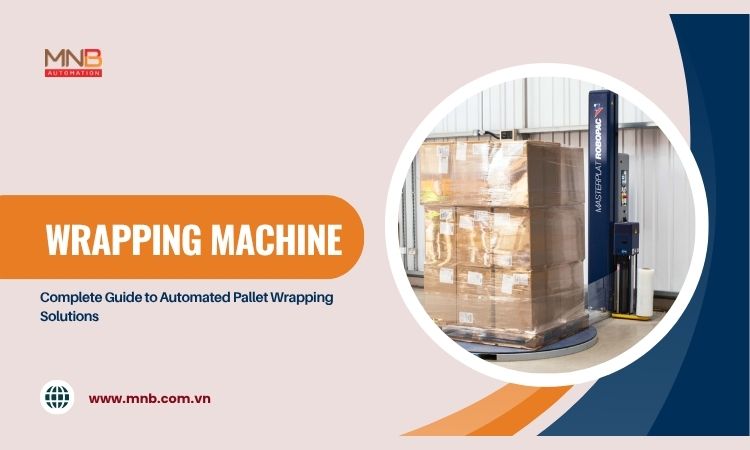


In modern manufacturing, warehousing, and logistics operations, securing palletized loads is essential to prevent product damage, reduce transportation risks, and improve supply chain efficiency. A pallet wrapping solution provides a reliable and cost-effective way to stabilize loads, optimize stretch film usage, and increase packaging productivity. Whether handling a few pallets per day or managing high-volume distribution centers, choosing the right solution can significantly improve operational performance.
Mục lục
What Is a Pallet Wrapping Solution?
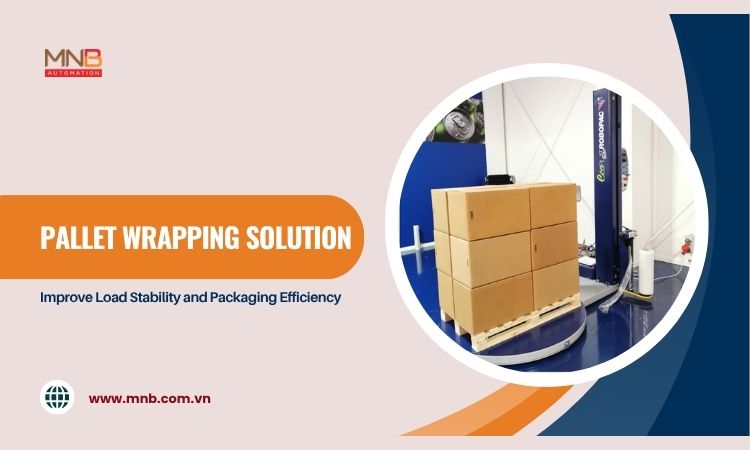
A pallet wrapping solution refers to the combination of equipment, stretch film, and automation technologies used to secure products on pallets with stretch film before storage or transportation.
The primary goal is to ensure that products remain stable throughout handling, warehousing, and shipping processes. Compared with manual wrapping, a professional pallet wrapping solution delivers consistent wrapping quality, reduces labor requirements, and minimizes film waste.
A complete solution may include:
- Pallet wrapping machines.
- Stretch film systems.
- Conveyor integration.
- Automated controls and sensors.
- End-of-line packaging equipment.
By integrating these elements, businesses can create a more efficient and reliable packaging operation.
Benefits of a Pallet Wrapping Solution
Reduce Product Damage
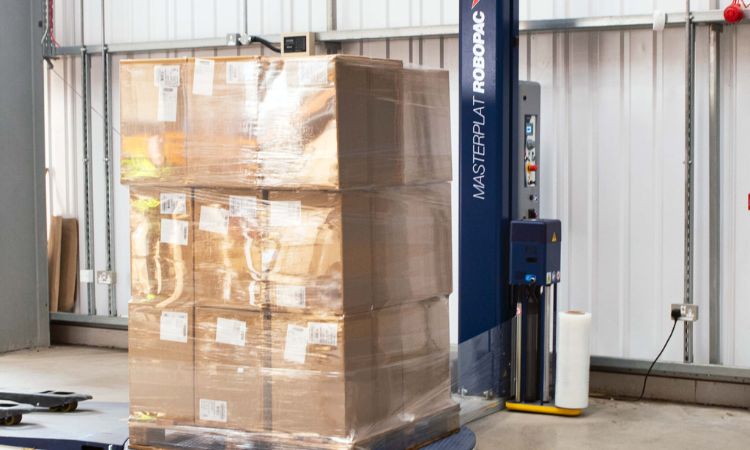
Unsecured or poorly wrapped pallets can shift during loading, unloading, and transportation. This movement often leads to damaged products, broken packaging, and costly customer complaints.
A properly designed pallet wrapping solution applies consistent film tension around the load, helping keep products firmly in place throughout the supply chain.
Improve Load Stability
Load stability is one of the most important factors in palletized shipping. A stable pallet is easier to transport, stack, and store.
Modern wrapping systems use programmable wrapping patterns and controlled film stretch to ensure uniform load containment, regardless of pallet size or product type.
Reduce Film Consumption
Manual wrapping often results in excessive film usage because operators apply inconsistent tension and overlapping layers.
Automated pallet wrapping systems can precisely control film pre-stretch and wrapping cycles, reducing film consumption while maintaining load security. Many businesses achieve substantial savings in packaging material costs after implementing automated solutions.
Increase Productivity
As production volumes increase, manual wrapping becomes a bottleneck.
A pallet wrapping machine can wrap pallets significantly faster than manual labor, allowing operators to focus on higher-value tasks. Faster packaging speeds contribute to smoother warehouse operations and improved throughput.
Reduce Labor Costs and Human Error
Manual pallet wrapping is physically demanding and can lead to inconsistent results. Automation reduces dependence on manual labor while ensuring every pallet is wrapped according to predefined standards.
The result is improved efficiency, reduced operator fatigue, and more predictable packaging quality.
Components of a Pallet Wrapping Solution
Pallet Wrapping Machine
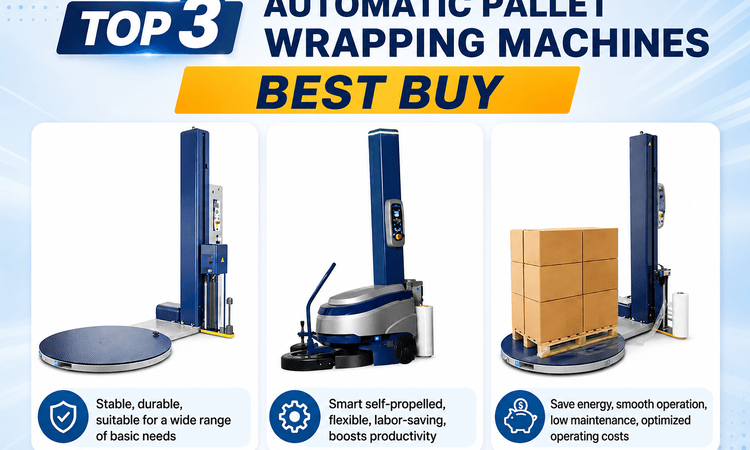
The wrapping machine is the core component of the system. Depending on production requirements, businesses can choose between semi-automatic, automatic, or robotic pallet wrappers.
Modern machines offer features such as:
- Adjustable wrapping programs.
- Film pre-stretch systems.
- Automatic load height detection.
- User-friendly control panels.
- Remote diagnostics and monitoring.
These capabilities help improve both productivity and wrapping consistency.
Stretch Film System
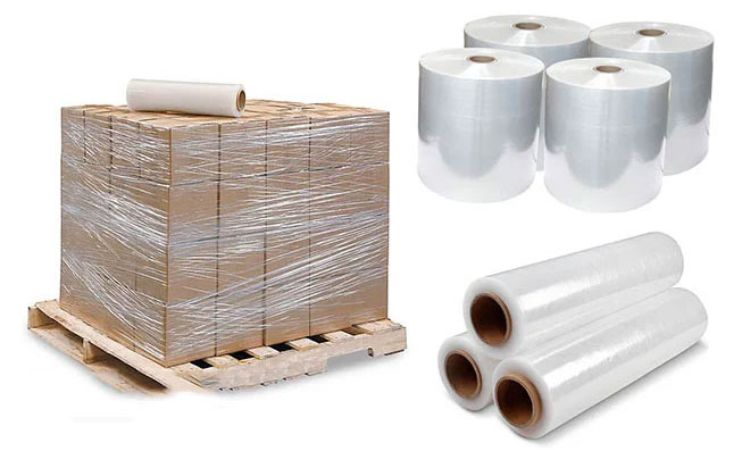
Stretch film plays a critical role in load containment and protection.
The right film selection depends on:
- Product weight.
- Pallet dimensions.
- Transportation conditions.
- Storage requirements.
High-performance machine-grade films often provide better load retention while reducing overall material consumption.
Conveyor Integration
For high-volume operations, pallet wrapping equipment can be integrated with conveyor systems to create a continuous packaging process. This integration allows pallets to move automatically between production, wrapping, labeling, and shipping areas, minimizing manual handling and increasing operational efficiency.
Automation Controls
Advanced wrapping systems utilize sensors and automated controls to detect pallet height and determine the optimal wrapping cycle. These technologies ensure consistent wrapping performance while reducing operator intervention and setup time.
Types of Pallet Wrapping Solutions
Semi-Automatic Pallet Wrapping Solution
Semi-automatic systems are ideal for businesses with moderate packaging volumes.
In this setup, the operator places the pallet on the machine and attaches the stretch film. The machine then performs the wrapping cycle automatically.
Key advantages include:
- Lower investment cost.
- Easy operation.
- Consistent wrapping quality.
- Reduced physical strain on operators.
This solution is commonly used by small and medium-sized manufacturers and warehouses.
Automatic Pallet Wrapping Solution
Automatic systems are designed for facilities with high production volumes and continuous packaging operations.
These machines can automatically start, wrap, cut, and secure the film without operator involvement.
Benefits include:
- Maximum productivity.
- Reduced labor requirements.
- High wrapping consistency.
- Easy integration with production lines.
Automatic pallet wrappers are often found in large manufacturing plants, distribution centers, and logistics hubs.
Robotic Pallet Wrapping Solution
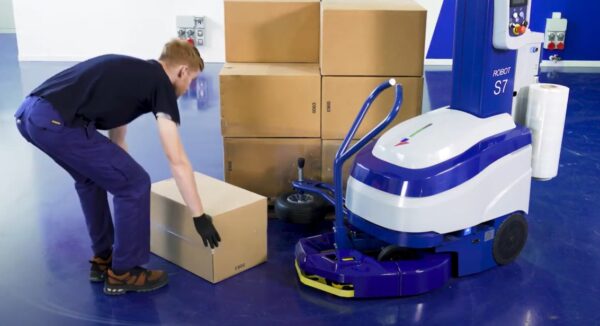
Robotic pallet wrappers provide flexibility for facilities that process pallets of varying sizes and locations.
Instead of rotating the pallet, the robot moves around the load while applying stretch film.
This solution offers:
- Flexible operation.
- Minimal installation requirements.
- Easy relocation.
- Suitable for oversized or irregular loads.
Robotic systems are particularly useful when pallet dimensions vary frequently.
Integrated End-of-Line Packaging Solution
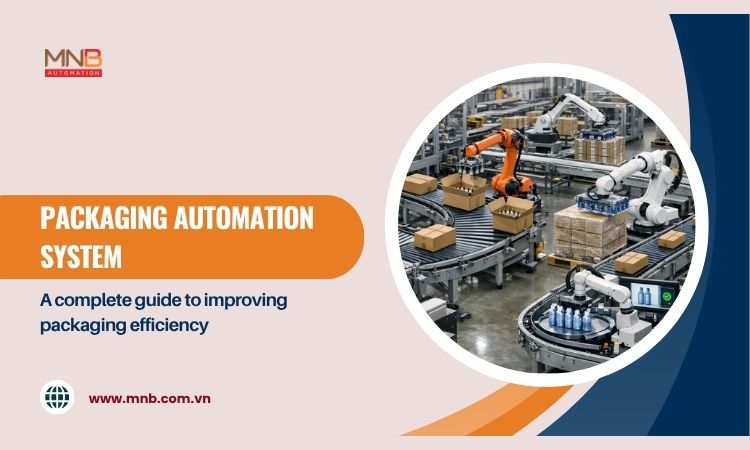
For maximum efficiency, many companies implement a complete end-of-line packaging system.
This approach combines:
- Conveyors.
- Pallet wrapping machines.
- Carton sealing equipment.
- Strapping machines.
- Labeling systems.
The result is a fully automated packaging process that reduces labor, improves consistency, and increases overall throughput.
How to Choose a Pallet Wrapping Solution
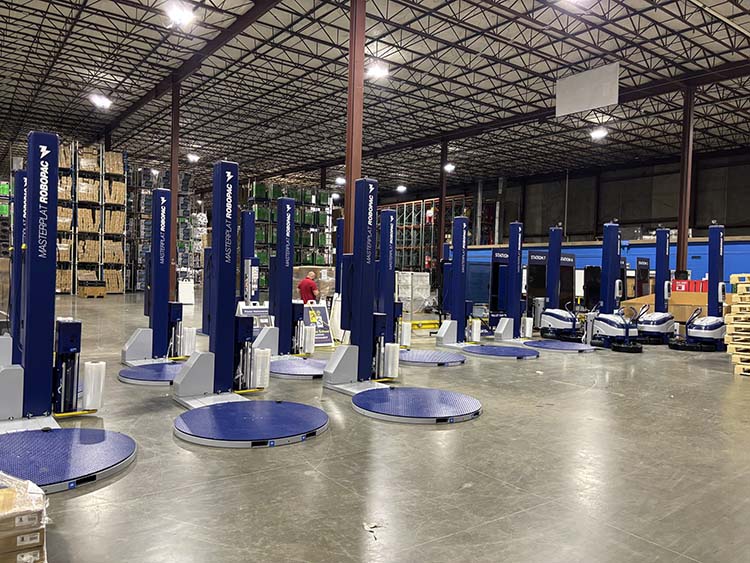
Production Volume
The number of pallets wrapped per day is one of the most important selection criteria.
- Low volume: Semi-automatic wrapper.
- Medium volume: High-performance semi-automatic or entry-level automatic system.
- High volume: Fully automatic integrated solution.
Pallet Dimensions and Load Characteristics
Consider pallet size, weight, shape, and product stability. Irregular or oversized loads may require specialized wrapping programs or robotic wrapping systems.
Available Floor Space
Different wrapping technologies require different installation footprints. Facilities with limited space should evaluate compact turntable machines or mobile robotic solutions.
Automation Requirements
Some businesses only need basic load stabilization, while others require complete integration with warehouse automation systems. Understanding current and future automation goals helps ensure long-term scalability.
Budget and Return on Investment
Although automatic systems require a higher initial investment, they often deliver faster returns through labor savings, improved productivity, and reduced film consumption. Evaluating total cost of ownership rather than purchase price alone provides a more accurate investment assessment.
Industries Using Pallet Wrapping Solutions
Pallet wrapping solutions are widely used across multiple industries, including:
Food and Beverage: Protect products from contamination and maintain load stability during distribution.
Logistics and Warehousing: Improve handling efficiency and reduce shipping damage.
Manufacturing: Secure finished goods before transportation to customers or distribution centers.
Pharmaceutical Industry: Ensure product integrity and packaging consistency.
Consumer Goods and E-Commerce: Support high-volume fulfillment operations with reliable pallet protection.
Problems Solved by Pallet Wrapping Solutions
Businesses often face packaging challenges that affect productivity and profitability.
A professional pallet wrapping solution helps address:
- Unstable pallet loads.
- Excessive stretch film consumption.
- Slow packaging processes.
- Inconsistent wrapping quality.
- High labor costs.
- Product damage during transit.
- Limited packaging capacity.
By eliminating these issues, companies can improve packaging efficiency and create a more reliable supply chain.
MNB Vietnam provides complete pallet wrapping solutions designed to meet the requirements of modern manufacturing and logistics operations. From semi-automatic pallet wrappers to fully integrated end-of-line automation systems, businesses can choose solutions that match their production volume, packaging goals, and investment budget.
With professional consultation, equipment integration expertise, installation support, and after-sales service, MNB Vietnam helps companies improve load stability, reduce packaging costs, and increase operational efficiency through advanced pallet wrapping technology.
Please contact MNB via hotline: 0936 304 626 or connect with our team directly on Zalo. We are ready to help you find the right packaging solution for your operational needs.