

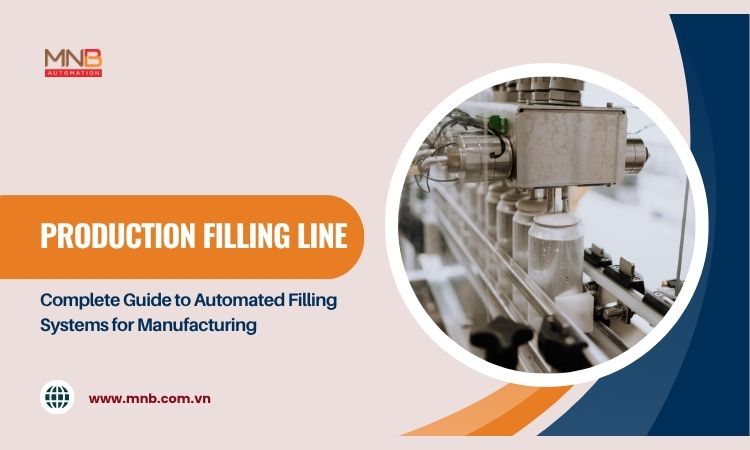
A production filling line helps manufacturers automate the process of filling, sealing, labeling, and preparing products for packaging. Whether used in food, beverage, cosmetics, pharmaceuticals, or chemical production, this system allows companies to achieve consistent output while reducing manual operations.
Mục lục
What is a production filling line?
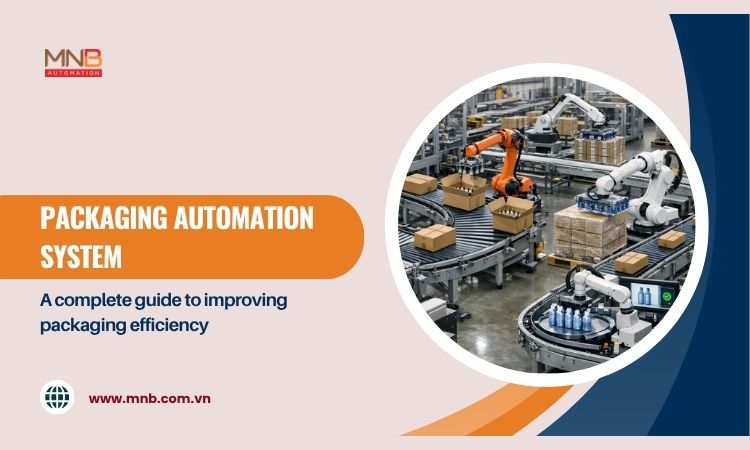
A production filling line is an integrated production system designed to automatically fill products into containers and move them through multiple packaging stages. Instead of relying on separate standalone machines, a filling line connects all equipment into a continuous workflow.
A typical production filling line can handle:
- Container feeding.
- Product filling.
- Capping or sealing.
- Labeling and coding.
- Quality inspection.
- Packaging and end-of-line processing.
The main goal is to increase productivity while maintaining high product consistency and reducing production errors.
How does a production filling line work?
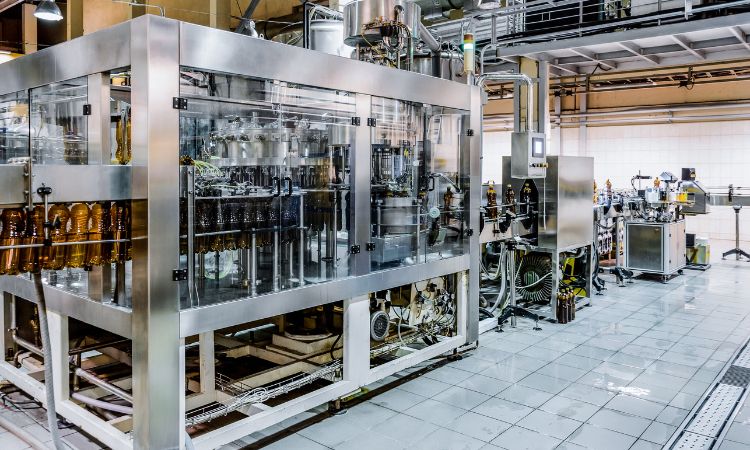
Although configurations vary by industry and product type, most production filling lines follow a similar process.
Container feeding
The process begins with containers entering the line through an automatic feeding system. Depending on the application, these containers may be bottles, jars, cans, pouches, or cartons. Conveyor systems transport containers efficiently and maintain a continuous production flow.
Product filling process
This is the core stage of the system. The filling machine dispenses a controlled amount of product into each container using technologies adapted to the product characteristics.
Common filling methods include:
- Volumetric filling.
- Gravity filling.
- Piston filling.
- Vacuum filling.
- Flow meter filling.
The selected method depends on viscosity, product behavior, and required filling accuracy.
Capping and sealing
After filling, products move to the sealing stage.
Containers may receive:
- Screw caps.
- Press caps.
- Heat seals.
- Induction seals.
This step helps protect product quality and extend shelf life.
Labeling and coding
Once sealed, products are labeled and marked with information such as:
- Product name.
- Batch number.
- Manufacturing date.
- Expiration date.
- Traceability code.
Automated labeling improves consistency and brand presentation.
Final inspection and packaging
Inspection systems verify filling accuracy, cap quality, and labeling position before products proceed to secondary packaging. Completed products are then prepared for storage or shipment.
Types of production filling lines
Different industries require different filling technologies depending on product characteristics, packaging formats, and production capacity. MNB provides a range of production filling line solutions designed for specific manufacturing applications.
Wine filling line
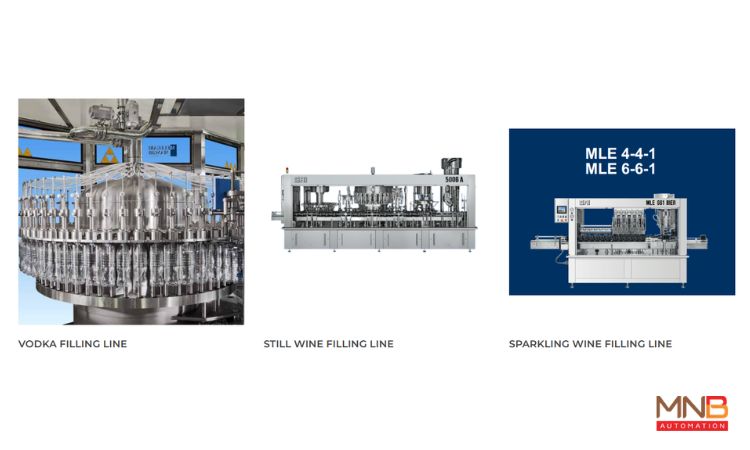
Wine filling lines are designed to handle glass bottles with high filling precision while preserving product quality throughout the packaging process.
Typical features include:
- Accurate liquid filling control.
- Bottle feeding and conveying systems.
- Automatic capping and sealing.
- Labeling and packaging integration.
Suitable for wineries and beverage manufacturers that require stable production and consistent product presentation.
Soft drink filling line
Soft drink filling lines are developed for carbonated and non-carbonated beverages with automated and continuous production.
Typical applications:
- Bottled water.
- Carbonated drinks.
- Juice products.
- Functional beverages.
The system supports efficient filling, sealing, and packaging for large production volumes.
Beer filling line
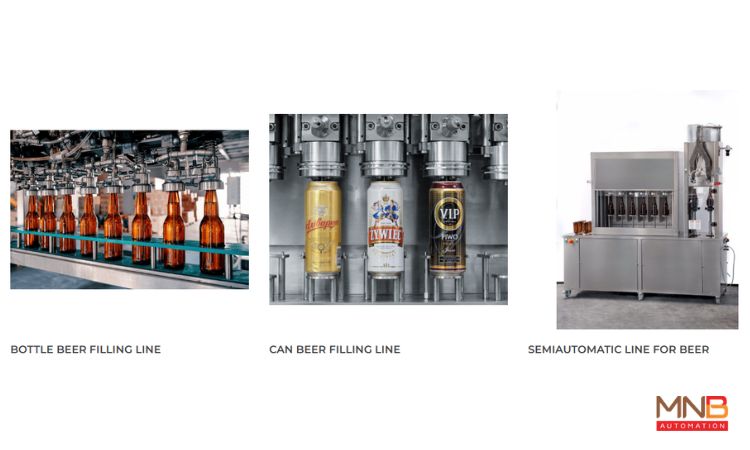
Beer production requires filling systems capable of maintaining speed while controlling foam and minimizing product loss.
Key capabilities:
- High-speed filling performance.
- Stable pressure control.
- Bottle or can handling flexibility.
- Integrated rinsing, filling, and capping processes.
This solution helps beverage manufacturers improve output while maintaining product quality standards.
Food filling and packaging line
Food production often requires an integrated solution that combines filling and end-of-line packaging.
Main advantages:
- Automated filling and portion control.
- Reduced manual handling.
- Better hygiene management.
- Seamless connection with packaging equipment.
This solution is suitable for packaged foods and ready-to-process food products.
Beer and spirit filling line
Beer and spirit filling lines are designed for manufacturers handling multiple beverage categories with strict consistency requirements.
Key functions:
- Flexible bottle format handling.
- Reliable liquid dosing.
- Automatic sealing and labeling.
- Easy integration into complete packaging lines.
This type of line supports efficient production while maintaining stable product quality across different beverage applications.
How to choose the right production filling line
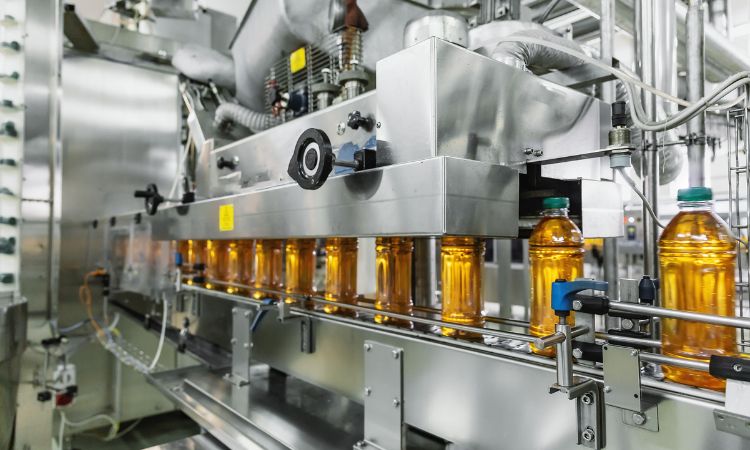
Selecting the right production filling line is an important decision that directly affects production efficiency, product quality, operating costs, and long-term scalability. A well-designed filling system should not only meet current production requirements but also support future business growth. Below are the key factors manufacturers should evaluate before investing.
Product characteristics
The first step is understanding the properties of the product being filled, as different products require different filling technologies and equipment configurations.
Key factors to consider include:
- Whether the product is liquid, powder, paste, or granule.
- Viscosity level and flow characteristics.
- Temperature sensitivity during filling.
- Foaming behavior that may affect filling accuracy.
- Product hygiene or contamination requirements.
Choosing equipment based on product characteristics helps improve filling consistency, reduce waste, and maintain product quality.
Production capacity requirements
Production volume plays a major role in determining the size and automation level of the filling line.
Before selecting a system, manufacturers should evaluate:
- Current production output targets.
- Peak production periods.
- Expected business growth.
- Number of operating shifts per day.
A system that is too small may create bottlenecks, while oversized equipment can lead to unnecessary investment costs. The ideal solution should support both present demand and future expansion.
Automation level
Production filling lines are available in semi-automatic and fully automatic configurations.
When evaluating automation level, consider:
- Available labor resources.
- Desired production speed.
- Product consistency requirements.
- Return on investment (ROI) expectations.
Higher automation can improve efficiency and reduce manual intervention, while semi-automatic solutions may offer greater flexibility for lower production volumes.
Factory layout and available space
Production performance depends not only on machine capability but also on how efficiently equipment fits into the manufacturing environment.
Important considerations include:
- Available installation space.
- Material flow throughout the facility.
- Accessibility for maintenance and cleaning.
- Utility requirements such as electricity, air, and water.
A properly planned layout helps maximize workflow efficiency and minimizes unnecessary movement during production.
Expansion capability and system integration
Production requirements often evolve over time, so selecting a scalable filling line is essential.
Look for systems that can support:
- Additional filling stations.
- Integration with conveyors and packaging equipment.
- Automatic labeling and inspection systems.
- Palletizing and end-of-line automation.
- Smart monitoring and production data collection.
A flexible and expandable design allows manufacturers to adapt more easily to future operational needs while protecting long-term investment.
If you are looking for a reliable supplier of production filling lines, MNB offers integrated filling solutions designed for different industries and production scales. From beverage and food applications to complete automated filling and packaging systems, MNB helps businesses improve production efficiency, maintain consistent product quality, and build scalable manufacturing operations for long-term growth.
Please contact MNB via hotline: 0936 304 626 or connect with our team directly on Zalo.